- Only pay for the students who attend on the day
- Curriculum-aligned programs and resources
- Guided or self-guided tour options available
Classroom Resources
Check out our free worksheets, videos, activities, and other downloadable resources to inspire ocean learning in your classroom!
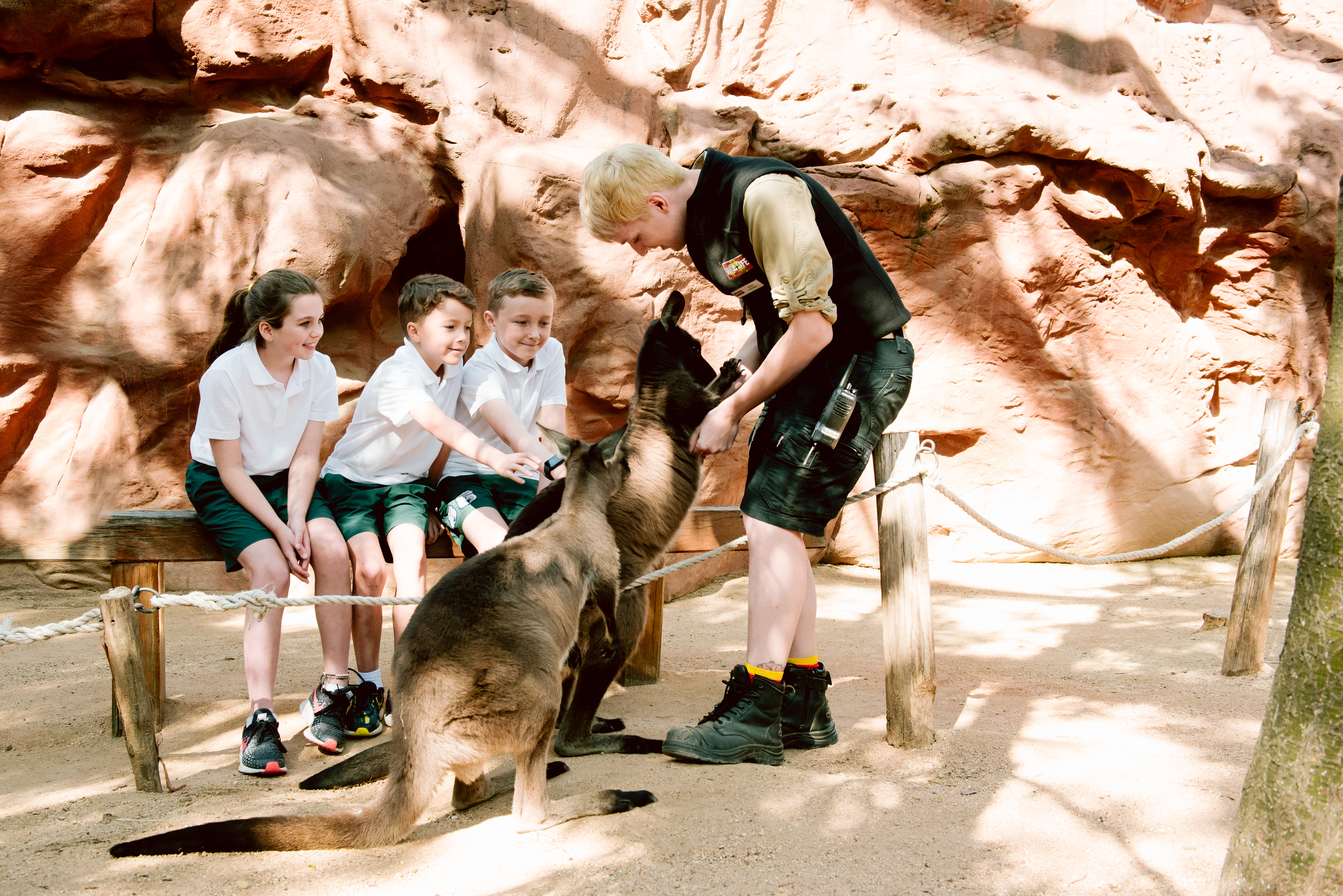
While these resources are classroom-appropriate, nothing complements these worksheets and activities like a visit to WILD LIFE Sydney Zoo. Opt for a self-guided or guided experience and learn more from the wildlife today!
View rates or enquire about an excursion today.
Want new resources sent straight to your inbox? Sign up below!
Sign up now!Jump straight to your stage!
Click the handy links below to jump to resources for your stage, plus take a look at our general posters, infographics and other fun resources below.
Early Stage 1 (Ages 4-6)
Fluffy Friends (Early Stage 1)
Fluffy Friends is the perfect little unit for any kindergarten teacher. This unit explores the animal features of Australian native animals that call WILD LIFE Sydney Zoo home!
This unit is best suited to Early Stage 1.
Curriculum Links:
- STe-3LW-ST → Explores the characteristics, needs and uses of living things
- STe-4LW-ST → Identifies that living things grow, change and have basic needs
- STe-1WS-ST → Observes, questions and collects data using their senses
- STe-2DP-T → Uses materials, tools and techniques to develop and create solutions
Download here:
Stage 1 (Ages 6-8)

External Features Worksheets
ST1-PQU-01: Asking questions and investigating cause and effect.
ST1-DAT-01: Collecting and interpreting data to identify patterns.
ST1-4LW-S: Identifying and grouping living things by their external features.
Download

Habitats
Students explore a variety of Australian habitats and discover how animals depend on their environments for food, shelter and survival. Through matching activities, habitat investigations, classification tasks, mapping exercises and creative challenges, learners examine the relationship between living things and their environments while developing observation and scientific inquiry skills. This resource addresses key Stage 1 NSW Science and Technology outcomes including:
ST1-SCI-01: Understanding the characteristics of living things.
ST1-SCI-02: Exploring how living things depend on each other and their environment to survive.
ST1-PQU-01: Asking questions and investigating cause and effect.
ST1-DAT-01: Collecting and interpreting data to identify patterns.
ST1-4LW-S: Identifying and grouping living things by their external features.
ST1-5LW-T: Understanding how living things depend on different environments to meet their needs
Download
Stage 2 Resources
'All Things Sugar Gliders' Resource
Download this presentation to showcase to your students all the amazing facts about these beautiful creatures!
This resource is best aligned to:
Science & Technology (Stage 2)
-
ST2-4LW-S
Living things depend on each other and their environment (habitat, diet, ecosystems) -
ST2-5LW-T
Living things have structural and behavioural adaptations (e.g. gliding, nocturnal) -
ST2-1WS-S
Investigates using information sources (reading and extracting facts)
Download Here

'In the Australian Bush' Resource
In the Australian Bush is a great unit of work that teaches students about the bushland habitats found in Australia.
Students can learn about the amazing wild fauna and flora that call these places home.
Best suited to Stage 2.
ST2-4LW-S
→ Examines how the environment affects the growth, survival and adaptations of living things
ST2-1WS-S
→ Observes, questions and collects data to investigate scientific ideas
ST2-2DP-T
→ Selects and uses materials, tools and processes to design and produce solutions
ST2-5LW-T (optional – if using habitat/conservation discussions)
→ Describes how living things interact with each other and the environment
Download:
- Teacher Resource Guide
- Student Worksheet 1: Koala Diagram Label
- Student Worksheet 2: Leaves Match-It
- Student Worksheet 3: 'Make Your Own' Craft Activity
- Eucalyptus Tree Classroom Poster

Food Webs Worksheets
Students investigate food chains, food webs and the flow of energy through ecosystems while exploring the relationships between plants, animals and their environments. Through classification activities, predator-prey investigations, habitat studies and food chain challenges, learners develop an understanding of how living things depend on one another for survival and how energy moves through ecosystems. This resource addresses key Stage 2 NSW Science and Technology outcomes including:
- ST2-SCI-01: Investigating how energy affects living systems, including food chains, food webs and habitats.
- ST2-PQU-01: Asking questions and investigating relationships between living things and their environments.
- ST2-DAT-01: Collecting, using and interpreting data to identify patterns and relationships in ecosystems.
Download
Life Cycles Worksheets
Students explore the life cycles of a variety of animals and discover how living things grow, develop and reproduce. Through life cycle sequencing, animal baby identification, growth investigations and species-specific case studies, learners examine the stages of animal development and the adaptations that help young animals survive. This resource addresses key Stage 2 NSW Science and Technology outcomes including:
- ST2-SCI-01: Understanding how living things grow, change and produce offspring.
- ST2-SCI-02: Exploring how living things depend on each other and their environment for survival.
- ST2-PQU-01: Asking questions and using evidence to investigate scientific concepts.
- ST2-DAT-01: Gathering and interpreting data to identify patterns and make predictions.
- ST2-4LW-S: Examining the life cycles of living things, including growth and reproduction.
- ST2-5LW-T: Understanding how structural and behavioural adaptations help living things survive.
Download
Stage 3 Resources

Adaptations Worksheets
Students investigate how animals have adapted to survive in a range of Australian environments. Through case studies, observation activities, scientific questioning and species-focused investigations, learners explore structural and behavioural adaptations, environmental challenges and the relationships between living things and their habitats. This resource addresses key Stage 3 NSW Science and Technology outcomes including:
- ST3-SCI-01: Understanding how structural and behavioural adaptations help living things survive.
- ST3-SCI-02: Exploring how environmental conditions influence the survival of living things.
- ST3-PQU-01: Planning and conducting investigations using scientific evidence.
- ST3-DAT-01: Collecting, organising and interpreting data to identify patterns and relationships.
- ST3-4LW-S: Examining how adaptations support survival in different environments.
- ST3-5LW-T: Understanding the relationship between environmental conditions and survival.
Download
Stage 4 Resources

Classification & Adaptations Worksheets
Students investigate how scientists classify living things and explore the structural and behavioural adaptations that help organisms survive in their environments. Through animal observations, dichotomous key activities, classification challenges and species-focused investigations, learners examine biodiversity, compare animal characteristics and develop scientific inquiry skills while applying real-world classification systems. This resource addresses key Stage 4 NSW Science outcomes including:
- SC4-LIV-02: Understanding how structural and behavioural adaptations support survival.
- SC4-LIV-03: Classifying organisms using observable features and scientific classification systems.
- SC4-PQU-01: Using scientific inquiry to ask questions, investigate and evaluate evidence.
- SC4-DAT-01: Collecting, processing and analysing data to identify patterns and relationships.
- SC4-NAT-01: Understanding how scientific knowledge is developed and used to study biodiversity.
Download
Food Webs Worksheets
Students explore the complex relationships that exist within ecosystems by investigating food chains, food webs and the roles organisms play in maintaining ecological balance. Through classification activities, plant and animal investigations, apex predator case studies and ecosystem impact discussions, learners examine how energy flows through environments and how changes can affect biodiversity and species survival. This resource addresses key Stage 4 NSW Science outcomes including:
- SC4-LIV-01: Understanding the interactions between living things in ecosystems, including food chains and food webs.
- SC4-LIV-02: Examining how structural and behavioural adaptations support survival.
- SC4-NAT-01: Understanding how scientific knowledge is used to predict and respond to ecosystem change.
- SC4-DAT-01: Collecting, processing and analysing data to identify patterns and relationships.
- SC4-PQU-01: Using scientific inquiry to investigate questions and evaluate evidence
Download
Stage 6 Resources

Biota Worksheets
Students investigate the diversity of Australian biota through the lens of evolution, adaptation and biodiversity. Through species comparisons, habitat investigations, reproductive strategy analyses and megafauna case studies, learners explore how organisms have adapted to their environments over time and examine the relationships between genetic diversity, biodiversity and species survival. This resource addresses key Year 11 Biology outcomes including:
- BI11-3: Analysing relationships between organisms and their environment using evolution by natural selection.
- BI11-4: Understanding the effects of genetic diversity and biodiversity on the survival of species and ecosystems.
- BI11-5: Examining adaptations and biological processes that increase survival and reproductive success.
- BIO11WS-03: Conducting scientific investigations to collect data and information.
- BIO11WS-04: Processing qualitative and quantitative data from scientific investigations.
- BIO11WS-05: Analysing and evaluating data to identify patterns, trends and relationships.
- BIO11WS-07: Communicating scientific understanding using evidence and scientific terminology.
Download
Themed Day Resources

This Walk Safely to School Day, take part in this quick & fun activity to teach students how to walk to school safely.
DOWNLOAD NOW

BESTIES
Download this beautiful storybook about two unlikely best friends, Ringo the wombat and Ella the yellow-footed rock wallaby, and share this story about friendship this Harmony Day!
Download Here
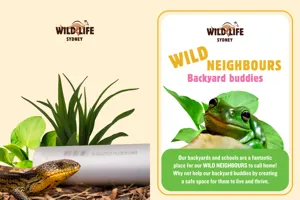
Wild Neighbours
Help your students discover their Wild Neighbours with this awesome resource!
Simply download and explore how you can make a lizard lounge or a frog hotel in your school playground or backyard!
Download Here
Posters & Fact Cards
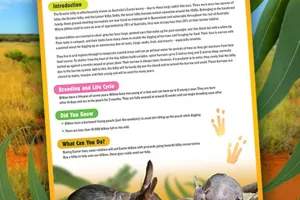
The Bilby
Download this wild-tastic classroom display poster, which will tell you all you need to know about the bilby.
Download Here
Animal Fact Cards
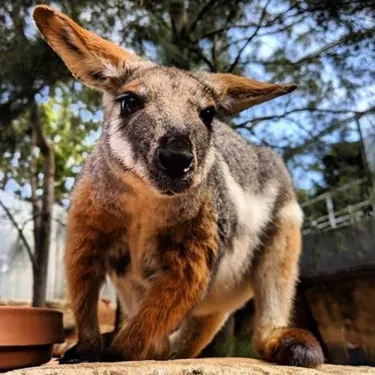
Yellow-footed Rock Wallaby
Cool and unique creature facts about the Yellow-footed Rock Wallaby!
Download Here
Arts & Crafts

Word Search
Search for Aussie animals in this word search while building spelling, vocabulary and observation skills. A simple and enjoyable activity designed to get students thinking about Australia's amazing…
Download
Make a Fact Cube
Build and customise an interactive animal fact cube featuring fascinating wildlife facts. This hands-on activity encourages research, critical thinking and creative learning while helping students…

The Aussie Big 5: Colouring & Connect-the-Dots
Encourage creativity and observation skills as students colour Australian animals and complete connect-the-dot challenges. A fun activity that helps develop fine motor skills while introducing…
Download
Wombat Maze & Find-a-Word
Help a wombat find its way home through an engaging maze, then reinforce wildlife vocabulary with a themed word search. A fun combination of problem-solving and literacy-based learning.
Download