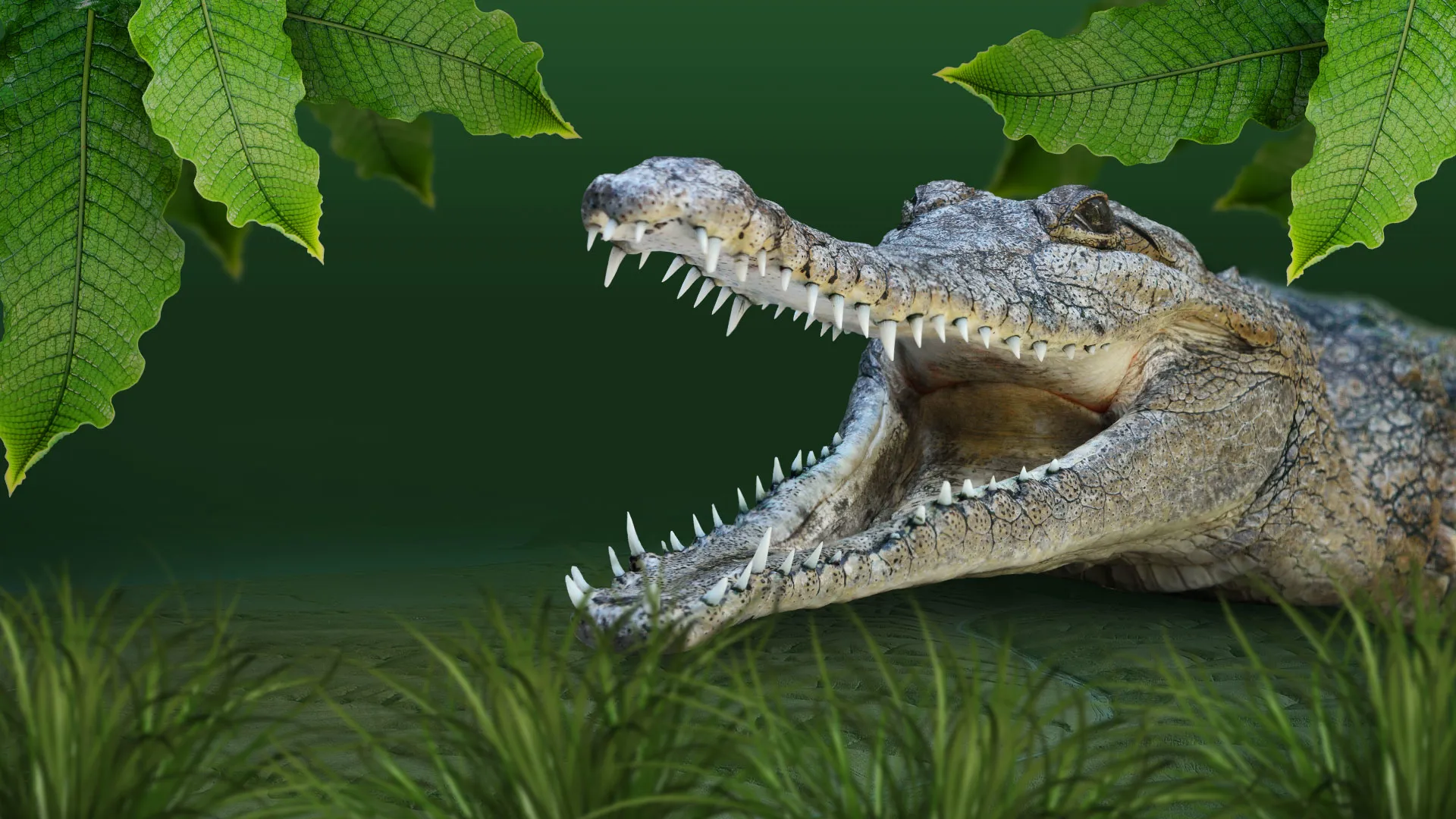
- WILD LIFE Sydney Zoo, Crocodile Billabong

Meet Our Freshwater Crocodiles
Book Now
Experience these jaw-some creatures from our outside and inside viewing decks. From these lookouts, you will have a birds-eye view; are they sunbathing on land or hiding in the water?
Then it's time to head below the waterline and come eye-to-eye with these ancient creatures. Pop your head right into their lair in our underwater viewing dome. From there you can get up close and personal, so close in fact you will be able to count their teeth!
Australian Freshwater Crocodile Crocodylus johnstoni has most recently been assessed for The IUCN Red List of Threatened Species in 2016. Crocodylus johnstoni is listed as Least Concern.



Fast Facts About Freshwater Crocodiles

Freshwater Crocodiles are smaller than Saltwater Crocodiles
"Freshies" can grow up to 3m long and weigh up to 100kg.
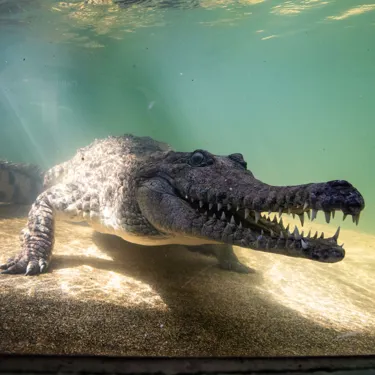
Freshwater Crocodiles are often found far inland and upstream, away from the coast
Freshwater Crocodiles inhabit rivers, lagoons, creeks and billabongs and can be found across Northern Australia.

Freshwater crocodiles are carnivorous, opportunistic feeders
Freshwater Crocodiles will eat a whole range of food including small mammals, reptiles, birds, and fish.

They often shelter in burrows along banks or among tree roots.
Freshwater Crocodiles have been known to tolerate saltwater when needed to, however they much prefer and thrive in freshwater habitats.
Freshwater Crocodile FAQs
Freshwater crocodiles are fascinating Aussie reptiles. Explore our most frequently asked questions to learn more about freshwater crocodiles and Crocodile Billabong at WILD LIFE Sydney Zoo.
No. Freshwater crocodiles and saltwater crocodiles are different species. Freshwater crocodiles are usually smaller, have a narrower snout and are generally found in freshwater environments, while saltwater crocodiles are much larger and can live in both saltwater and freshwater habitats.
Freshwater crocodiles are wild animals and should always be treated with respect. At WILD LIFE Sydney Zoo, guests can learn about crocodiles safely while our animal care team looks after them in a managed environment.
Freshwater crocodiles can tolerate saltwater for short periods when needed, but they are best suited to freshwater habitats such as rivers, creeks and billabongs.
Freshwater crocodiles can grow up to around 3 metres long and weigh up to 100 kilograms. They are generally smaller and more slender than saltwater crocodiles.
Freshwater crocodiles are carnivores. In the wild, they eat a variety of prey, including fish, birds, reptiles and small mammals.
Freshwater crocodiles live across northern Australia, where they can be found in freshwater habitats such as rivers, creeks, lagoons and billabongs.
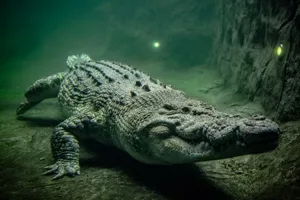
Rocky the Saltwater Crocodile
On Saturday the 23rd July 2022 Rocky our Saltwater Crocodile sadly passed away. Rocky was originally from Rockhampton in Northern Australia. Like most crocodiles, he spent much of his time dozing in his large pool. Adult Saltwater crocodiles will eat almost anything they can catch including fish, kangaroos, crabs, reptiles and birds. Saltwater crocodiles have the strongest bite in the world! Their bite is over 3.5 times as strong as a lion. Click here to learn more interesting facts about saltwater crocodiles.
At WILD LIFE Sydney Zoo, Rocky loved to eat barramundi. Rocky touched the hearts and minds of not only his dedicated team, but also the broader community and we are grateful for the support of staff, visitors and partners at this sad time. We are providing support and care for our dedicated team of keepers who cared so deeply about Rocky.
