- WILD LIFE Sydney Zoo, Wallaby Cliffs

Meet Ringo
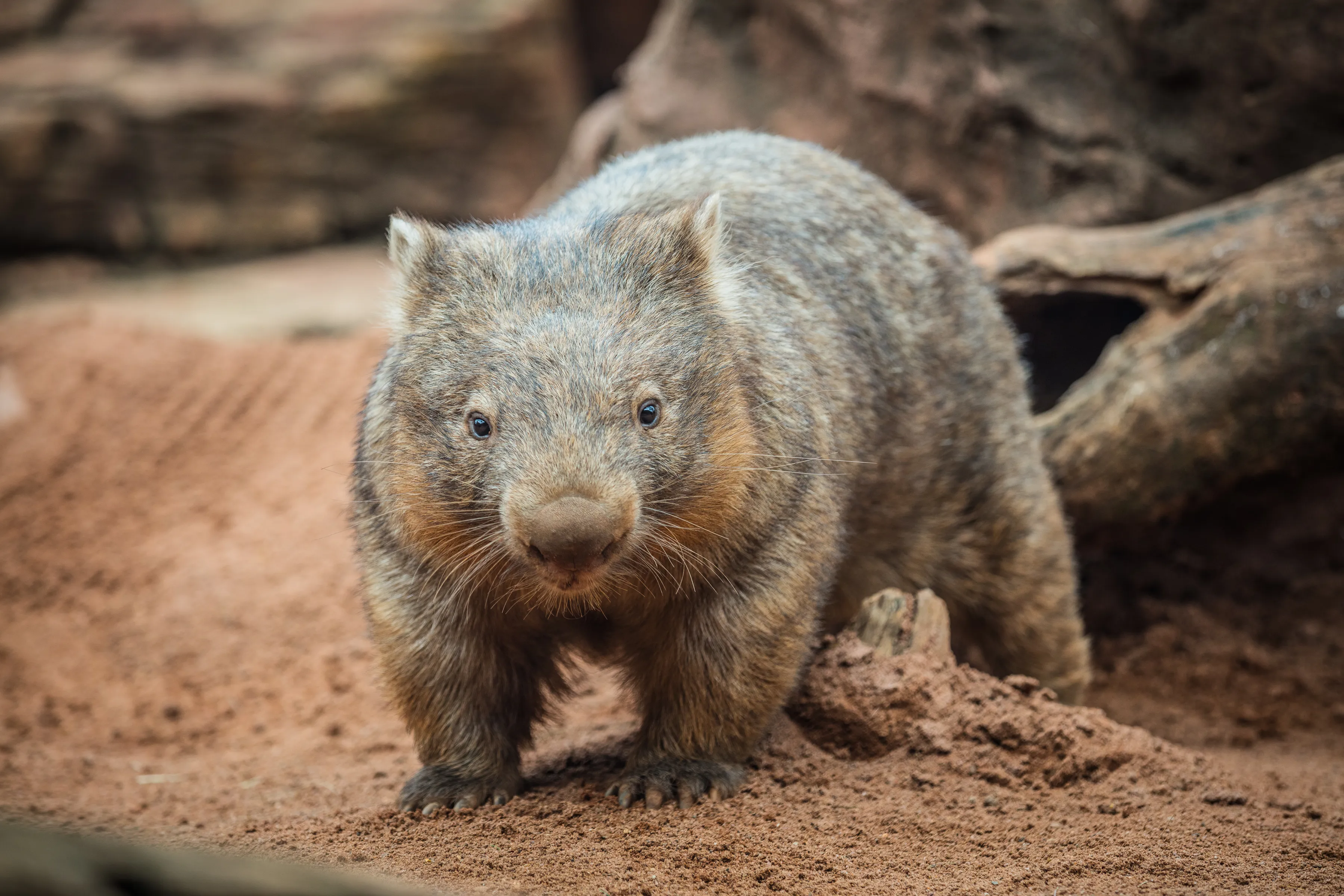
Meet Ringo, our bum-scratch loving, sleepy and boisterous bare-nosed wombat.
Ringo is one of WILD LIFE Sydney Zoo’s most loved residents, known for his big personality, impressive nose and unmistakable wombat charm. He loves a good snooze, a well-earned keeper scratch, and getting stuck into the enrichment activities his keepers create to keep him active, curious and engaged.
Like any true wombat, Ringo also has a serious appreciation for treats, especially corn! Whether he is exploring Wallaby Cliffs, playing with his enrichment or keeping his keepers on their toes, Ringo brings plenty of character to every day at WILD LIFE Sydney Zoo.
As a joey, Ringo needed round-the-clock attention, regular bottle feeds and plenty of support from his keepers while he grew stronger. He quickly became known for his big personality, funny faces and impressive nose, earning himself a name worthy of a little star.

Today, Ringo is one of our most recognisable residents. Curious, boisterous and full of character, he can often be found exploring Wallaby Cliffs with his wallaby friends, enjoying a well-earned snack or charming guests with his classic wombat expressions.
When you visit Ringo, you’ll discover more about bare-nosed wombats, their powerful digging skills, their important role in the Australian landscape and the simple ways we can all help protect native wildlife.

Ringo Quick Facts
Name: Ringo
Born: August 2013
Where to find him: Wallaby Cliffs at WILD LIFE Sydney Zoo
Personality: Curious, cheeky and full of character

General Admission
-
Peak pricing applies to school holidays and weekends.
Ticket Type Weekdays Weekends, School Holidays & Public Holidays On the day Advanced Adult $49.00 $39.00 $49.00 Child $36.00 $26.00 $36.00 Concession $39.00 $29.00 $39.00 Child (0-1 yrs) FREE Please note: Our ticket pricing is subject to available capacity and prices may fluctuate during periods of high demand.
Peak pricing includes school holidays in other Australian states.
- Price includes Digi Photo Pass with 8 digital photos included (excludes Koala Photo experience)!
- Children under 16 years of age must be accompanied by an adult (18+)
- Get your ticket on your phone
-
Ticket Type Weekdays Weekends, School Holidays & Public Holidays On the day Advanced Adult $49.00 $39.00 $49.00 Child $36.00 $26.00 $36.00 Concession $39.00 $29.00 $39.00 Child (0-1 yrs) FREE *All concession holders must have a valid concession/student/health care card to gain access to the attraction with a Student/Senior ticket.
Please note: Our ticket pricing is subject to available capacity and prices may fluctuate during periods of high demand.

2 Attraction Pass
- Visit SEA LIFE Sydney Aquarium within 60 days after visiting WILD LIFE
- Price includes Digi Photo Pass with 8 digital photos included!
-
Savings percentages are based on the maximum cost of purchasing individual entry tickets for each attraction when compared to purchasing a combo pass for the same date type (e.g. peak/off-peak, advance/on-the-day purchase).

Merlin Annual Pass
- 12 months of family fun at 8 top attractions in Australia and New Zealand
- Receive a great range of exclusive benefits and deals
- No blackout periods
- Pre-Booking is essential across all attractions
Fast Facts About Wombats

Wombats are marsupials
Like kangaroos, koalas and wallabies, wombats are marsupials. Baby wombats are called joeys and continue developing in their mother’s pouch after birth.

Wombats can move surprisingly fast
They may look slow and solid, but wombats can run at speeds of up to 40km per hour over short distances.

Wombats have a backwards-facing pouch
A wombat’s pouch opens backwards, which helps protect the joey from dirt while mum is digging.

Wombats are herbivores
Wombats eat grasses, roots, bark and other plant material. At WILD LIFE Sydney Zoo, Ringo receives a carefully prepared diet suited to his needs.

About Bare-nosed Wombats
Bare-nosed wombats are strong, powerful marsupials found across parts of southern and eastern Australia, including Tasmania. They are also known as common wombats, although there is nothing ordinary about them.
Built low to the ground with strong legs and long claws, wombats are expert diggers. Their burrows provide shelter from heat, cold and predators, and can also create important habitat opportunities for other wildlife.
Bare-nosed wombats face threats in the wild, including vehicle strikes and habitat loss. Ringo’s story is a powerful reminder to take care on roads through wildlife areas, especially at dawn, dusk and night when many native animals are most active.

IUCN Conservation Status
Least Concern (LC)
Scientific Name
Vombatus ursinus
Alternative Name
Common Wombat
Classification
Class: Mammalia
Order: Diprotodontia
Family: Vombatidae, the wombat family
Genus: Vombatus
Identification and Size
Bare-nosed Wombats are large, stocky marsupials with short, powerful legs, rounded ears and a broad, hairless nose. Their coarse fur can range from sandy brown and grey to dark brown or black. Strong paws and long claws make them powerful diggers. Adults are generally around one metre long and can weigh up to 30kg.
Habitat
They live in forests, woodlands, coastal heathlands and grasslands where the soil is suitable for digging. Bare-nosed Wombats shelter in burrows, which help protect them from predators and extreme temperatures.
Distribution
Bare-nosed Wombats are found across south-eastern Australia, from southern Queensland through eastern New South Wales and Victoria to south-eastern South Australia. They also occur throughout Tasmania and on several islands in Bass Strait. Their distribution has become fragmented in some mainland regions.
Feeding and Diet
Their diet consists mainly of native grasses and sedges, as well as the roots of shrubs and trees. Their sharp front teeth grow continuously, helping them cut and chew tough vegetation.
Breeding
A female usually gives birth to one small joey. After birth, the joey crawls into its mother’s backward-facing pouch, which helps prevent soil from entering the pouch while she digs. The joey remains in the pouch for around seven to ten months and may remain dependent on its mother until it is approximately 18 to 21 months old.
Threats
Although Bare-nosed Wombats remain widespread, some local populations are affected by habitat loss and fragmentation, vehicle collisions, illegal shooting and attacks by domestic or wild dogs.
Conservation
The species is listed globally as Least Concern. However, continued management is important in areas where populations are declining or becoming increasingly fragmented. Conservation measures include protecting suitable habitat, reducing vehicle strikes, managing sarcoptic mange and supporting safe coexistence between wombats and landholders.

Join a Wombat Keeper Talk
Want to know what Ringo eats, why wombats dig, or whether wombat poo really is cube-shaped? Join one of our keeper talks and hear directly from the team who care for Ringo every day.
Our expert keepers share fascinating facts about bare-nosed wombats, Ringo’s rescue story, his favourite treats, and the enrichment activities designed to keep him active, curious and engaged. It is a great way to learn more about Ringo’s personality, his daily care and the important role wombats play in Australia’s natural environment.
Keeper talks are included with your WILD LIFE Sydney Zoo admission. Check the daily schedule when you arrive so you do not miss your chance to learn more about our bum-scratch loving, corn-loving wombat.
Explore

Explore Wallaby Cliffs
Ringo can be found in Wallaby Cliffs, a rugged Australian habitat at WILD LIFE Sydney Zoo inspired by the rocky landscapes many native animals call home.
This zone is the perfect place to slow down, look a little closer and discover some of Australia’s most iconic wildlife. Alongside Ringo, you can meet our wallabies and learn more about the animals that dig, graze, hop and explore in these unique environments.
Keep an eye out for Ringo as he snoozes, explores his habitat or enjoys his keeper-created enrichment.
Learn More
Bare-nosed Wombat FAQs
Yes, you can meet Ringo, our bare-nosed wombat, at WILD LIFE Sydney Zoo in Darling Harbour.
Ringo lives at WILD LIFE Sydney Zoo and can be found in Wallaby Cliffs with his wallaby friends.
Ringo is a Bare-nosed Wombat, also known as a common wombat. His scientific name is Vombatus ursinus.
Yes, wombats are marsupials. Their young are called joeys and continue developing in the mother’s pouch after birth.
Wombats are herbivores. In the wild, they eat grasses, roots, bark and other plant material.
Yes, wombats are powerful diggers and live in burrows. Their burrow systems help keep them cool in summer, warm in winter and protected from predators.
Yes. Even though wombats look slow and solid, they can run surprisingly fast over short distances.
Bare-nosed wombats are currently listed as Least Concern, but they can still face threats such as road accidents, habitat loss and disease.
Ringo came into care as an orphaned joey after being found near Nowra on the NSW South Coast. He was raised with dedicated keeper care and has grown into one of WILD LIFE Sydney Zoo’s most loved residents.
Give the wombat lots of space, observe from afar, and of course take lots of photos. 📷

Ringo turns double digits on Wombat Wednesday!
Our much adored and famously mischievous wombat celebrated his 10th birthday today with a personalised wombat friendly birthday cake and birthday themed enrichment! Guests and keepers gathered to sing Happy Birthday to the marsupial, before demolishing a custom-made chocolate wombat cake!
Related blog posts
THE AUSSIE BIG FIVE
WILD LIFE Sydney Zoo, home of the Aussie Big 5! Meet your favourite iconic Australian animals including koalas, kangaroos, Ringo the wombat, freshwater crocodiles and our resident platypus!
Related blog posts
Cassowary Walkthrough Now Open
Be Immersed in the Daintree Rainforest at WILD LIFE Sydney Zoo with our new Cassowary Walkthrough!
Related blog posts
FACTS ABOUT KOALAS
Get to know more about one of Australia's most iconic animals with these interesting facts about koalas.
Related blog posts
Facts About Kangaroos
Get to know more about one of Australia's iconic animals with these 5 interesting facts about kangaroos.
Related blog posts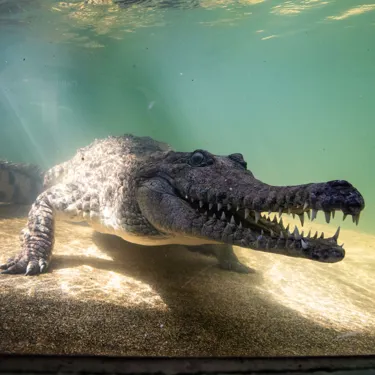
Crazy Croc Facts You Probably Didn’t Know!
Speaking of Crazy Crocs...Have You Met Our Freshwater Cros?
Related blog posts- Australian Museum. Bare-nosed Wombat – Vombatus ursinus. Information on identification, size, habitat, distribution, feeding, behaviour, breeding and life cycle.
- NSW Department of Climate Change, Energy, the Environment and Water. Wombats and Living with Wombats. Information on bare-nosed wombat habitat, burrows, breeding, threats, wildlife protection and coexistence.
- Old, J., Stannard, H., Woinarski, J.C.Z. and Burbidge, A.A. (2025). Vombatus ursinus. The IUCN Red List of Threatened Species. Current global conservation status and assessment of the bare-nosed wombat.
- Mammal Diversity Database. Vombatus ursinus – Common Wombat. Accepted scientific name, alternative names, taxonomic classification, distribution and conservation status.
- Thorley, R.K. and Old, J.M. (2020). “Distribution, abundance and threats to bare-nosed wombats (Vombatus ursinus).” Australian Mammalogy, 42(3), 249–256.
- Linley, G.D., Jolly, C.J., Geary, W.L., Welbergen, J.A. and Nimmo, D.G. (2024). “Wombat burrows are hotspots for small vertebrates in a landscape affected by wildfire.” Journal of Mammalogy. Research on the role wombat burrows can play in providing habitat and shelter for other wildlife.
- Yang, P.J., Lee, A.B., Chan, M., Kowalski, M. and Qiu, K. (2021). “Intestines of non-uniform stiffness mold the corners of wombat feces.” Soft Matter, 17, 475–488. Research explaining how wombats produce cube-shaped droppings.
- ABC News (2014). Orphaned baby wombat makes first zoo appearance. Background on Ringo’s rescue near Nowra and his early care at WILD LIFE Sydney Zoo.
- WILD LIFE Sydney Zoo Curatorial and Keeper Team. Internal animal records and keeper observations relating to Ringo’s history, birth date, personality, diet, enrichment and daily care.
