- WILD LIFE Sydney Zoo, Nightfall
Meet Our Fascinating Frogs
Leap into a world of amphibians at WILD LIFE Sydney Zoo and discover our fascinating frogs from across Australia. Nestled within our Nightfall habitat, this lively little crew is full of colour and character.
Keep your eyes peeled as you explore. These clever climbers and camo champions love to blend in! Will you spot them tucked among the leaves or mid-leap between branches?

Littlejohn’s Tree Frog
Litoria littlejohni
Littlejohn’s Tree Frog is a shy and rarely seen species, known for its soft, low “weep…weep…” whistle echoing through swamps and forests. Unlike brighter tree frogs, it has a pale brown body with dark speckles and a broad dark band running down its back, helping it blend into leaf litter and wetland plants. Bright flashes of orange on its lower body are only revealed when it moves.
These frogs are most active at night, hunting small insects around shallow pools and slow-moving creeks, and are often only spotted after rain during the breeding season. They rely on very specific habitats like upland wetlands, making them especially sensitive to environmental change.
The Littlejohn’s Tree Frog is currently listed as "Endangered" by the IUCN Red List of Threatened Species.
Learn about our "Frogservation Lab" and our world first on-site breed for release program.
Learn More

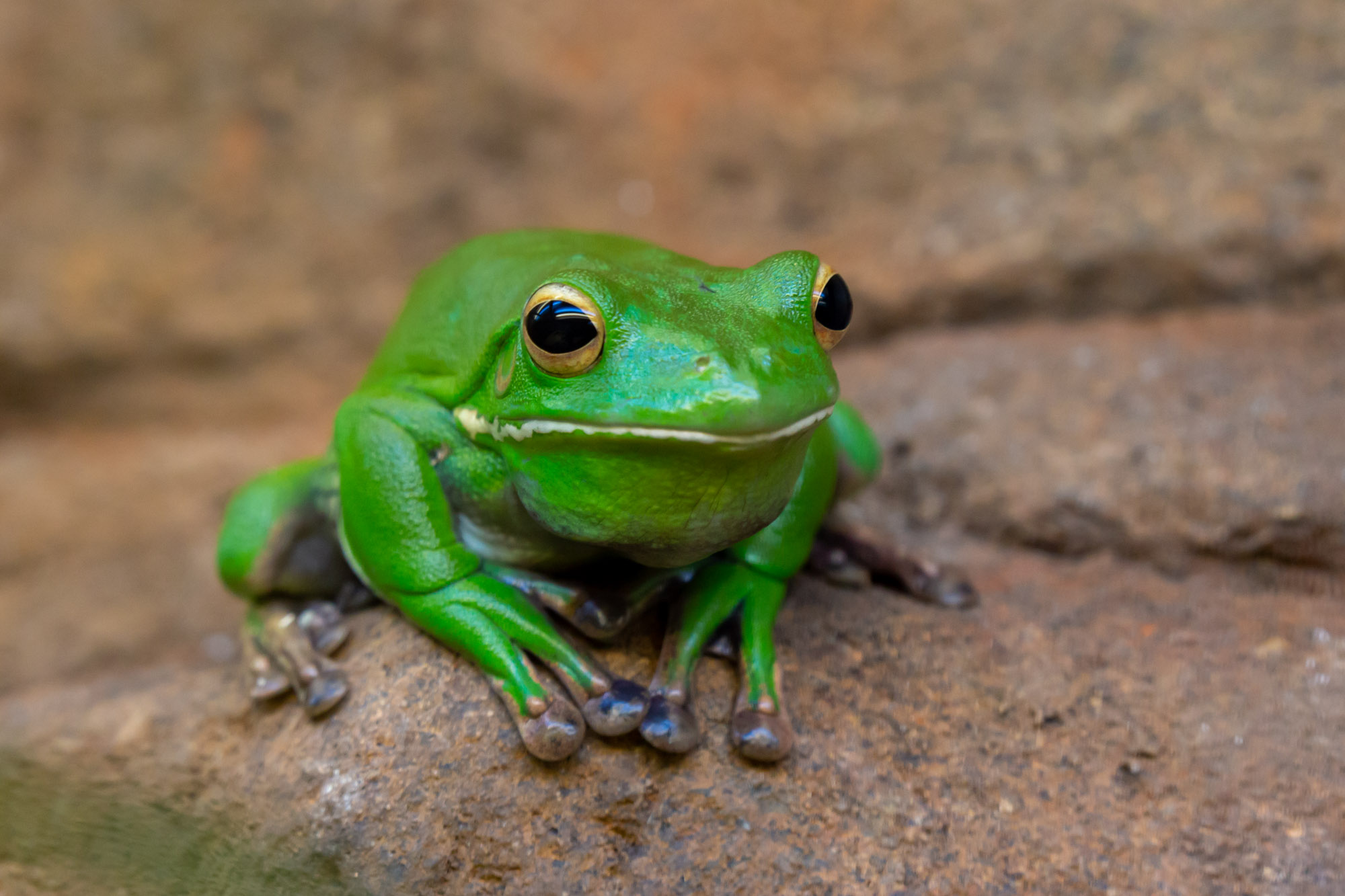
Green Tree Frog
Litoria caerulea
Known for its bright green colour and gentle nature. It eats insects and
other small invertebrates, often hunting at night. While they’re common in many areas, they still face threats from habitat loss and
pollution... and are sometimes found curled up in letterboxes or toilets!
The Australian green tree frog is currently listed as "Least Concern" by the IUCN Red List of Threatened Species.

Magnificent Tree Frog
Litoria splendida
This large species native to northern Australia, feeding mainly on insects and other small invertebrates. Their biggest threat is habitat loss due to land clearing and climate change. These frogs have a loud, barking call and are known to sometimes live in toilets or drains
in the tropics!
Listed as a species of Least Concern by the International Union for Conservation of Nature (IUCN), they may still be affected by habitat loss and pollution.



RIBBIT-ing Frog Facts!

Frogs are an indicator species!
Indicator species (or bioindicators) are plants, animals, or microorganisms whose presence, absence, or abundance reflects specific environmental conditions or changes in an ecosystem.

Frogs swallow with their eyeballs!
When eating, a frog pulls its eyeballs down into the sockets, which protrudes into the roof of its mouth, pushing the food down its throat.

Frogs can change colours!
They use pigment cells called chromatophores to do this. They only really do this to hide from predators or as a response to their thermal environment

Frogs can breathe through their skin!
Frogs have thin, moist, and highly vascularized skin that allows oxygen to pass directly into their blood and carbon dioxide to escape, both in water and on land
Experiences

Breakfast With the Koalas
Calling all koala lovers! Seize the day and take advantage of our Breakfast with the Koalas experience! We also have a discounted price for group bookings of 10+ people. Save $15 per guest!

Koala Photo
Step into the koala enclosure and get up close to one of the most iconic Australian animals for a memorable photo opportunity. Plus, you'll even take home a printed photo!

WILD Encounter Cassowary
Join us for a rare opportunity to hand-feed our Southern Cassowary, Princess!
