From Joey to Adult: Life Cycles and Conservation on a Guided Excursion to WILD LIFE Sydney Zoo
- Thursday 27th August 2026
- Schools
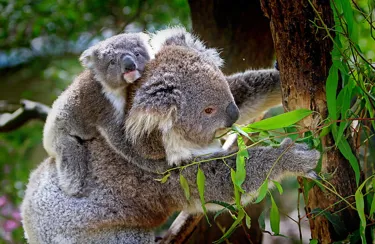
Students can learn what a marsupial is from a diagram. What they can't easily learn from a diagram is what it looks like when a joey pokes its head out of a pouch, or why keepers work tirelessly to save the Littlejohn's Tree Frog as part of an active breeding program. WILD LIFE Sydney Zoo puts Australian life cycles, and the conservation work protecting them, directly in front of a class.
Life Cycles, Australian-Style
Australian animals have some of the most distinctive life cycle strategies in the natural world, and WILD LIFE Sydney Zoo's habitats are built around showing them clearly:
- Marsupial development — pouch young, joeys and the extended parental care that sets marsupials apart
- Monotreme reproduction — the egg-laying platypus and echidna, a genuine curriculum curveball for students used to "mammals give birth to live young"
- Amphibian and reptile life cycles — metamorphosis and cold-blooded growth patterns in the frog and reptile habitats
Conservation Leadership in Action
WILD LIFE Sydney Zoo isn't just a viewing experience; it's an active participant in species conservation, which gives students a real-world case study in what protecting a life cycle actually requires: breeding programs, habitat management and public education. It's a natural bridge from "here's an animal" to "here's why its future isn't guaranteed, and what's being done about it."
Curriculum Connections
Science (Living World, K–10)
- Life cycles and reproductive strategies
- Adaptations linked to survival and reproduction
Science 7–10 Syllabus (2023)
- Reproduction, inheritance and variation
- Human impact on species survival
Geography / HSIE
- Conservation, sustainability and human-environment interactions
Make It a Guided Excursion
A Guided Tour with a WILD LIFE educator gives your class dedicated time with keeper-level knowledge of breeding programs and life cycle stages that self-guided visits can't replicate. It's a strong option for classes covering reproduction, inheritance or conservation as part of Stage 4–5 Science, where the "why" behind a breeding program lands better coming from someone who works with the animals daily.
Guided tours can be booked standalone or paired with SEA LIFE Sydney Aquarium next door to compare terrestrial and marine life cycle strategies on the same day.
Learn More About Our Guided ToursFAQs
The guided tour's coverage of reproduction and inheritance maps directly onto Stage 4-5 Living World content, with real examples students can reference in assessments.
Yes - guided tour content areas include Conservation, Habitats, Lifecycle and Classification & Adaptation, so teachers can flag a priority focus when booking.
Yes, guided tours run for all year levels, with content pitched to the group.
