Australian Ecosystems Every Student Should Experience
- Tuesday 7th July 2026
- Schools
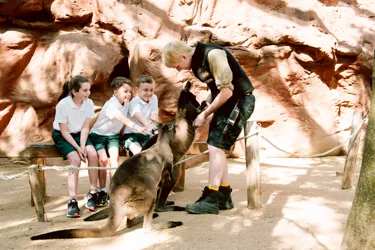
Australia is home to some of the world's most unique ecosystems. From tropical rainforests and coastal wetlands to alpine regions and the arid Outback, each environment supports plants and animals that have evolved remarkable adaptations for survival.
While students can learn about these ecosystems through textbooks and videos, nothing compares to seeing Australia's native wildlife up close. A visit to WILD LIFE Sydney Zoo gives students the opportunity to observe iconic Australian animals, explore how habitats shape biodiversity and understand the importance of protecting our natural environments.
Located in the heart of Darling Harbour, WILD LIFE Sydney Zoo provides an accessible, curriculum-aligned learning experience that can be combined with other nearby Merlin attractions for a full day of cross-curricular discovery.
Why Ecosystems Are Best Explored Through Experience
Ecosystems are complex. Students are often introduced to concepts like biodiversity, food webs and adaptation in the classroom, but these ideas become far more meaningful when they can observe them in action.
At WILD LIFE Sydney Zoo, students can compare the characteristics of different Australian habitats while observing animals that have evolved to thrive within them. Seeing a koala resting high in the eucalyptus canopy, a saltwater crocodile lurking below the water's surface or colourful reptiles camouflaged within their enclosure creates memorable learning moments that deepen understanding.
These experiences encourage students to move beyond memorising facts and begin asking scientific questions:
- Why do different ecosystems support different species?
- How do animals compete for resources?
- What happens when habitats change?
- How do humans influence biodiversity?
These are the kinds of questions that support inquiry-based learning and encourage critical thinking.
Supporting the NSW Curriculum
A visit to WILD LIFE Sydney Zoo naturally supports learning across multiple stages.
Primary Science and Technology
Students explore:
- Living things and their environments
- Features of Australian habitats
- Animal adaptations
- Life cycles
- Human impacts on ecosystems
Students can compare habitats, classify animals and identify the resources species need to survive.
Secondary Science
Older students investigate:
- Biodiversity
- Ecosystem interactions
- Natural selection
- Adaptation
- Conservation biology
- Environmental sustainability
The zoo provides real-world examples that help students connect classroom theory with authentic observation.

Bringing Geography into the Conversation
Ecosystems are shaped by geography.
As students move through WILD LIFE Sydney Zoo, they begin to recognise the relationship between climate, vegetation, water availability and animal distribution across Australia.
Teachers can use the experience to explore questions such as:
- Why don't koalas live in deserts?
- How do wetlands support biodiversity?
- Why are some ecosystems more vulnerable than others?
- How does Australia's climate influence wildlife?
These discussions create natural links between Science and Geography, helping students understand that ecosystems don't exist in isolation—they are shaped by the landscapes around them.
Guided Tours Create Richer Learning
For schools wanting to maximise educational outcomes, a Guided Tour offers an opportunity to explore Australian ecosystems with the support of knowledgeable educators.
Guided experiences encourage students to:
- Observe animal behaviour.
- Compare habitats.
- Discuss conservation challenges.
- Ask questions.
- Make connections to classroom learning.
Interactive discussions often lead to richer classroom conversations once students return to school.
Extend Learning Across Multiple Attractions
One of the biggest advantages of visiting WILD LIFE Sydney Zoo is its location within Darling Harbour.
Teachers can extend ecosystem learning by combining their visit with SEA LIFE Sydney Aquarium, where students compare terrestrial ecosystems with marine environments. Observing sharks, rays, penguins and reef species helps reinforce concepts such as biodiversity, food webs and adaptation across different habitats.
Students can then visit Sydney Tower Eye to gain a bird's-eye view of Sydney's natural and built environments. From above, they can identify waterways, green spaces and urban development while discussing how geography influences ecosystems.
For a broader cross-curricular experience, schools can include a visit to Madame Tussauds Sydney, where students encounter influential Australians connected to conservation, science, and environmental advocacy.
A multi-attraction excursion transforms a single subject into a day of integrated learning.
Continuing Learning Back in the Classroom
Excursions provide an excellent starting point for ongoing inquiry.
Teachers might ask students to:
- Compare two Australian ecosystems.
- Design an ideal habitat for a chosen species.
- Investigate threatened Australian animals.
- Explore local conservation initiatives.
- Create food webs using animals observed during the excursion.
These activities reinforce learning while encouraging students to think critically about Australia's natural environment.
Why Teachers Choose WILD LIFE Sydney Zoo
Teachers consistently seek excursions that are engaging, curriculum-aligned and easy to organise.
Located in Sydney's CBD, WILD LIFE Sydney Zoo offers:
- Easy public transport access
- Curriculum-linked learning experiences
- Guided educational tours
- Native Australian wildlife
- Opportunities for cross-curricular learning
- The ability to combine multiple attractions in one excursion
Students leave with a deeper appreciation of Australia's incredible biodiversity and a stronger understanding of why protecting our ecosystems matters.
Frequently Asked Questions
Which year levels is WILD LIFE Sydney Zoo suitable for?
Programs can support learning from early primary through to senior secondary, with curriculum links across Science, Geography and Sustainability.
Can schools book Guided Tours?
Yes. Guided Tours provide curriculum-focused learning led by experienced educators.
Can we visit more than one attraction?
Absolutely. Many schools combine WILD LIFE Sydney Zoo with SEA LIFE Sydney Aquarium, Sydney Tower Eye and Madame Tussauds Sydney to create a full-day educational experience.
Bring Australia's ecosystems to life for your students.
Explore WILD LIFE Sydney Zoo's curriculum-aligned school programs, Guided Tours and multi-attraction excursion packages to create an unforgettable day of learning.
