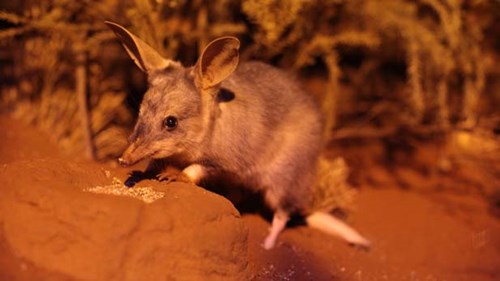
Bandicoot
Isoodon macrourus
Welcome Crash & Hazel to our Nocturnal Zone! The pair both weigh just one kilogram and are a year old. Find them hanging out with our two yellow-bellied gliders and rufous bettong!
The northern brown bandicoots are native to the coastlines of northern and eastern Australia, where they spend their nights foraging for plants, insects, and small critters like lizards and snails. These pocket-sized marsupials can grow up to 2.1kg and 47cm long.
Northern Brown Bandicoot Isoodon macrourus has most recently been assessed for The IUCN Red List of Threatened Species in 2016. Isoodon macrourus is listed as Least Concern.
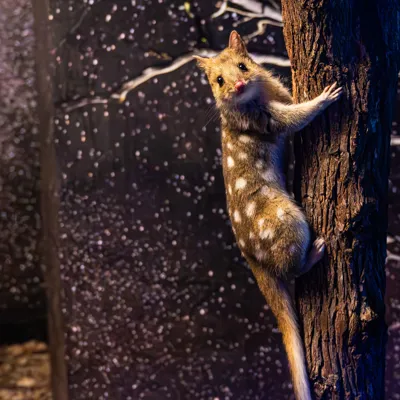
Eastern Quoll
Dasyurus viverrinus
Known for their striking fur pattern - ranging from fawn to black with white spots - these small cat-like marsupials play a crucial role in the ecosystem as natural pest controllers with a substantial portion of their diet consists of insects including crickets and spiders. Being an agile predator, quolls can also hunt larger prey such as rabbits, rats, and mice.
Eastern Quoll Dasyurus viverrinus has most recently been assessed for The IUCN Red List of Threatened Species in 2014. Dasyurus viverrinus is listed as Endangered under criteria A2b.
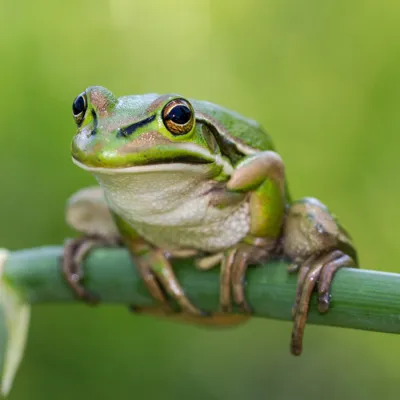
Green and Golden Bell Frog
Litoria aurea
The Green and Golden Bell Frogs are considered vulnerable due to habitat loss, pollution, and introduced predators like the mosquito fish. It feeds on insects, spiders, and even smaller frogs. Despite its name, it doesn’t have a loud call. Its croak is more of a soft growl.
Green Frog Litoria aurea has most recently been assessed for The IUCN Red List of Threatened Species in 2021. Litoria aurea is listed as Near Threatened under criteria A2ce.
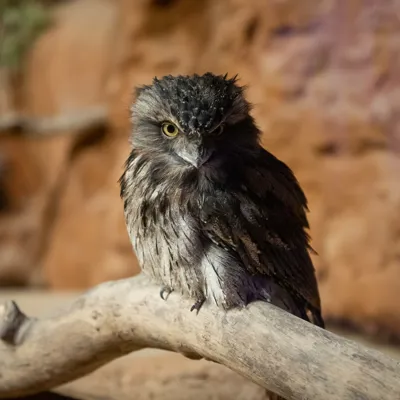
Tawny Frogmouth
Podargus strigoides
Often mistaken for owls, the tawny frogmouth are more closely related to the nightjar family, characterised by its medium size, long wings, and stout bill. These nocturnal birds are masters of camouflage, spending their days perfectly still, blending into tree bark with their mottled plumage. By night, they hunt using a sit-and-wait strategy, pouncing on unsuspecting prey with their wide, hooked beaks.
Tawny Frogmouth Podargus strigoides has most recently been assessed for The IUCN Red List of Threatened Species in 2024. Podargus strigoides is listed as Least Concern.
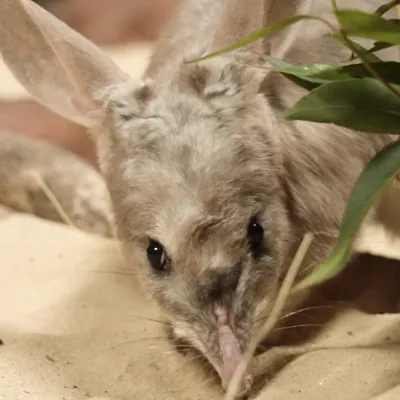
Bilby
Macrotis lagotis
The Bilby is one of Australia’s most unique but also lesser-known species. They are what we call a keystone species, which means their survival increases the chances of survival of 19 other threatened species. They thrive in a wide variety of vegetation types and land forms from open forest to grasslands. They are the largest of the bandicoot family however, these marsupials are now a threatened species due to introduced predators such as cats and foxes. WILD LIFE Sydney Zoo is committed to helping is restore the Bilby population. Come visit our beautiful Bilbies in our Nightfall zone.
Bilby Macrotis lagotis has most recently been assessed for The IUCN Red List of Threatened Species in 2015. Macrotis lagotis is listed as Vulnerable under criteria C1.
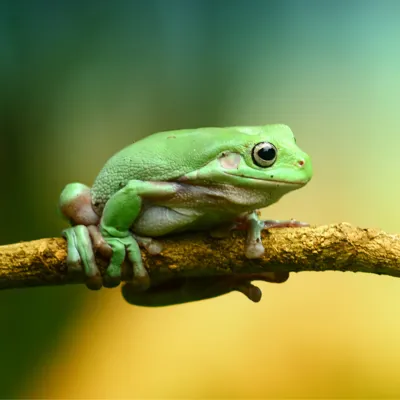
Green Tree Frog
Litoria caerulea
Known for its bright green colour and gentle nature. It eats insects and
other small invertebrates, often hunting at night. While they’re common in many areas, they still face threats from habitat loss and
pollution... and are sometimes found curled up in letterboxes or toilets!
Green Tree Frog Litoria caerulea has most recently been assessed for The IUCN Red List of Threatened Species in 2021. Litoria caerulea is listed as Least Concern.
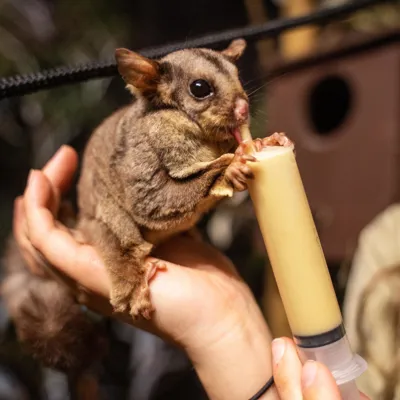
Sugar Glider
Petaurus breviceps
Sugar Gliders are a charming, native Australian marsupial that play an important role in the ecosystem, helping to control the insect population and pollinate native Australian plants. These palm-sized, nocturnal marsupials can be found in tall eucalypt forests and woodlands along eastern and northern NSW.
Sugar Glider Petaurus breviceps has most recently been assessed for The IUCN Red List of Threatened Species in 2016. Petaurus breviceps is listed as Least Concern.
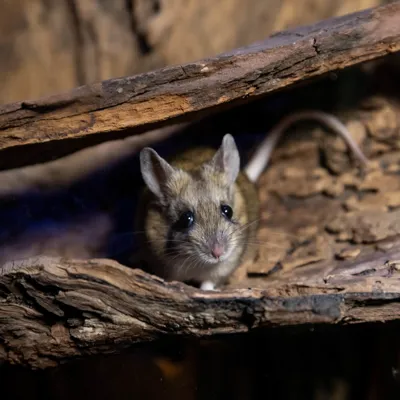
Plains Mouse
Pseudomys australis
Whilst the Plains Mouse may appear small in size to some, they are one the largest Rodents to exist in their habitat reaching an impressive 85 grams. They are often described as stocky and have a brown coat with silver sheen on the backs and side to accompany their large eyes and ears. Notably, the Plain Mouse has quite a unique range of vocalisations with anything from chirps to squeaks.
Plains Mouse Pseudomys australis has most recently been assessed for The IUCN Red List of Threatened Species in 2015. Pseudomys australis is listed as Vulnerable under criteria B2ab(i,ii,iii,iv,v)c(i,ii,iii,iv); C2b.
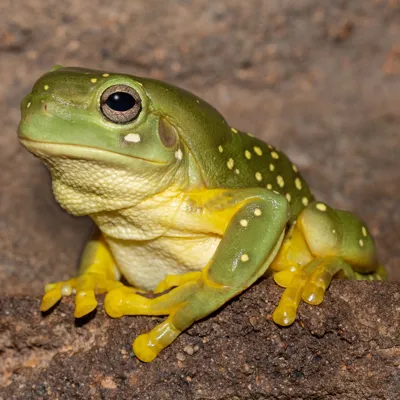
Magnificent Tree Frog
Litoria splendida
This large species native to northern Australia, feeding mainly on insects and other small invertebrates. Their biggest threat is habitat loss due to land clearing and climate change. These frogs have a loud, barking call and are known to sometimes live in toilets or drains
in the tropics!
Magnificent Tree Frog Litoria splendida has most recently been assessed for The IUCN Red List of Threatened Species in 2021. Litoria splendida is listed as Least Concern. They may still be affected by habitat loss and pollution.
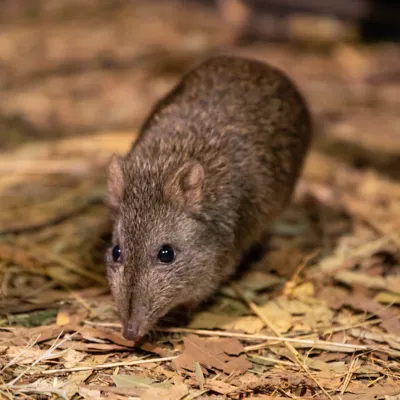
Potoroo
Navigating the forest floor with ease, the long-nosed potoroo sniffs the ground in a side to side motion in pursuit of a meal. When dawn breaks the grey brown coat of the Potoroo enables them to take refuge in a lush understory of grass-trees, sedges, ferns, heath or low shrubs of tea trees. Potoroos have certainly made their mark on history as one of the animal kingdom's first truffle hunters.
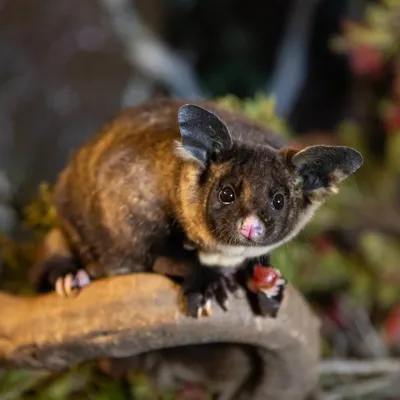
Yellow-bellied Glider
Petaurus australis
Meet our 2 Yellow-bellied Gliders, Leia and Corymbia. Gliders have the ability to glide up to 114 meters and can make such high pitched shrieks that they can be heard up to 500m away. Our 2 girls love to climb and can be found all over their exhibit in Nightfall, even climbing along the roof! These beautiful creatures are listed as "vulnerable" on the endangered species list, due to declining populations due to loss of habitat.
Yellow-bellied Glider Petaurus australis has most recently been assessed for The IUCN Red List of Threatened Species in 2024. Petaurus australis is listed as Vulnerable under criteria A2bc+3bc+4bc.
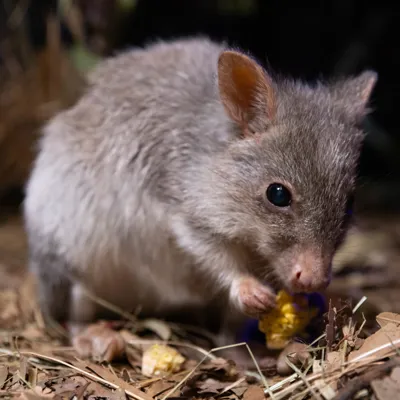
Rufous Bettong
Aepyprymnus rufescens
Rufous Bettongs can be found all up the eastern coast of Australia. These little marsupials have prehensile tails that they use to carry nesting material to make their nests. Francesca and Renezmay our two Refous Bettongs are not morning people and if awoken to early they will make pig-like growling noises. Come and see these little cuties in our Nightfall exhibit.
Rufous Bettong Aepyprymnus rufescens has most recently been assessed for The IUCN Red List of Threatened Species in 2015. Aepyprymnus rufescens is listed as Least Concern.
